SSBR 2026 GRADUATION CEREMONY
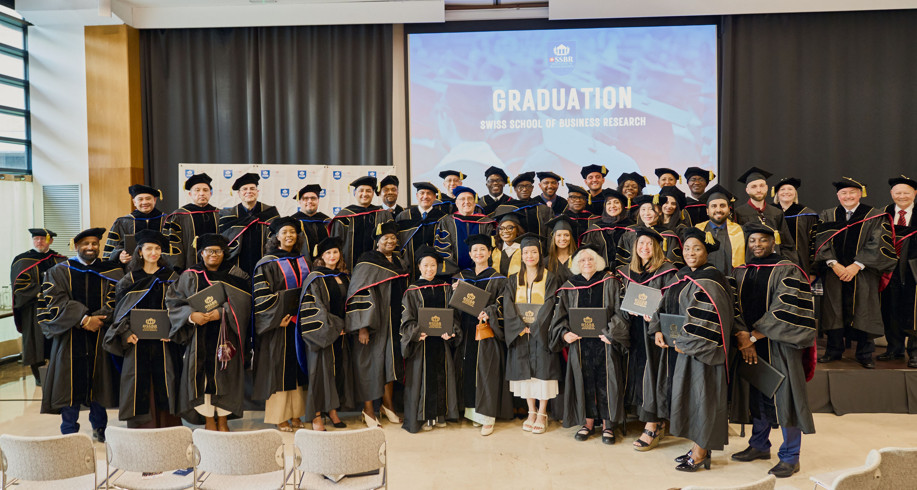
Celebrating the Class of 2026
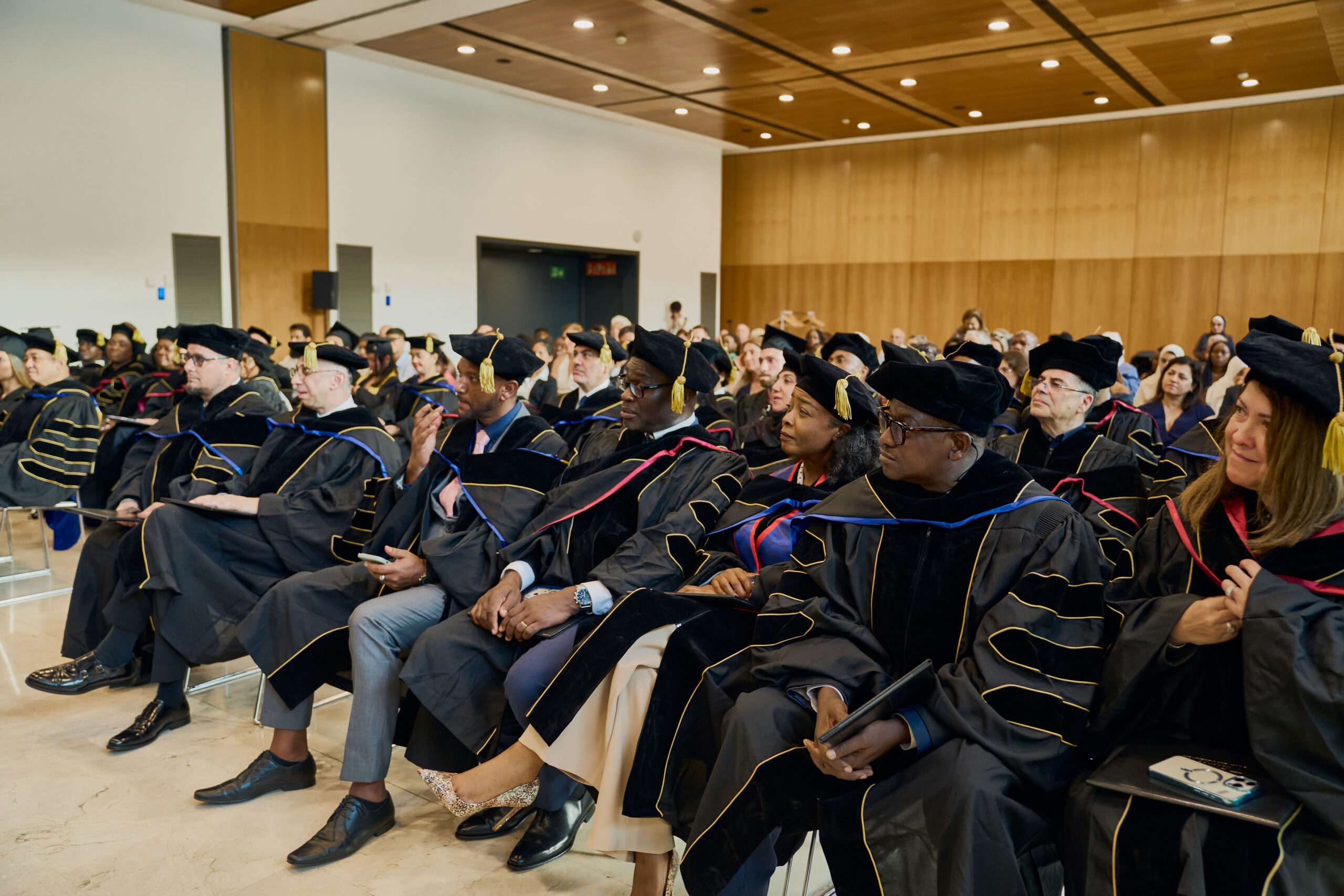
On 5 September 2026, the Swiss School of Business Research welcomed graduates, families, faculty and guests from around the world to Hotel Alimara in Barcelona, Spain, for the SSBR Graduation Ceremony 2026.
What had begun for each graduate as an individual academic journey became, for one evening, a shared celebration of achievement, perseverance and professional growth.
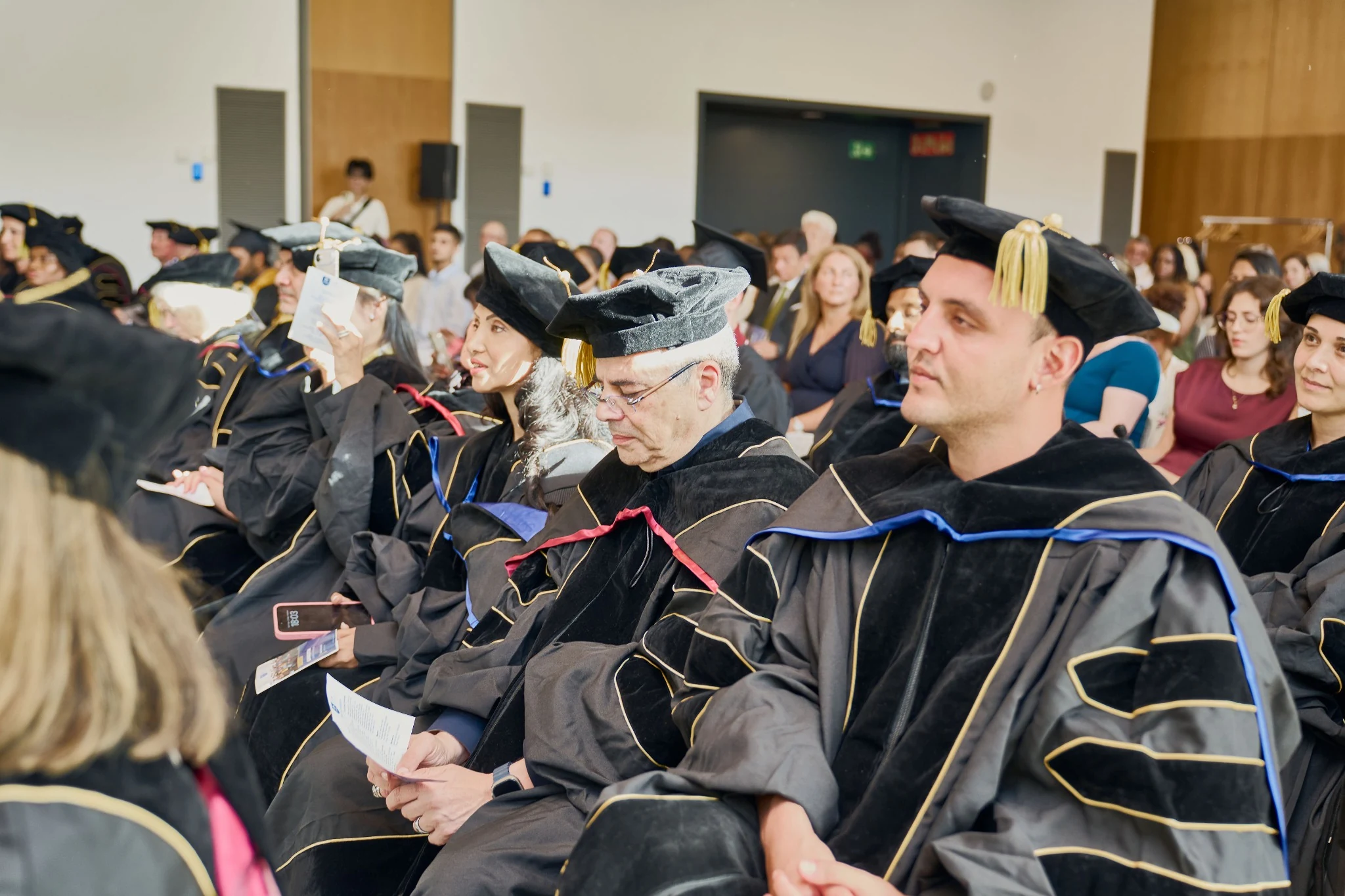
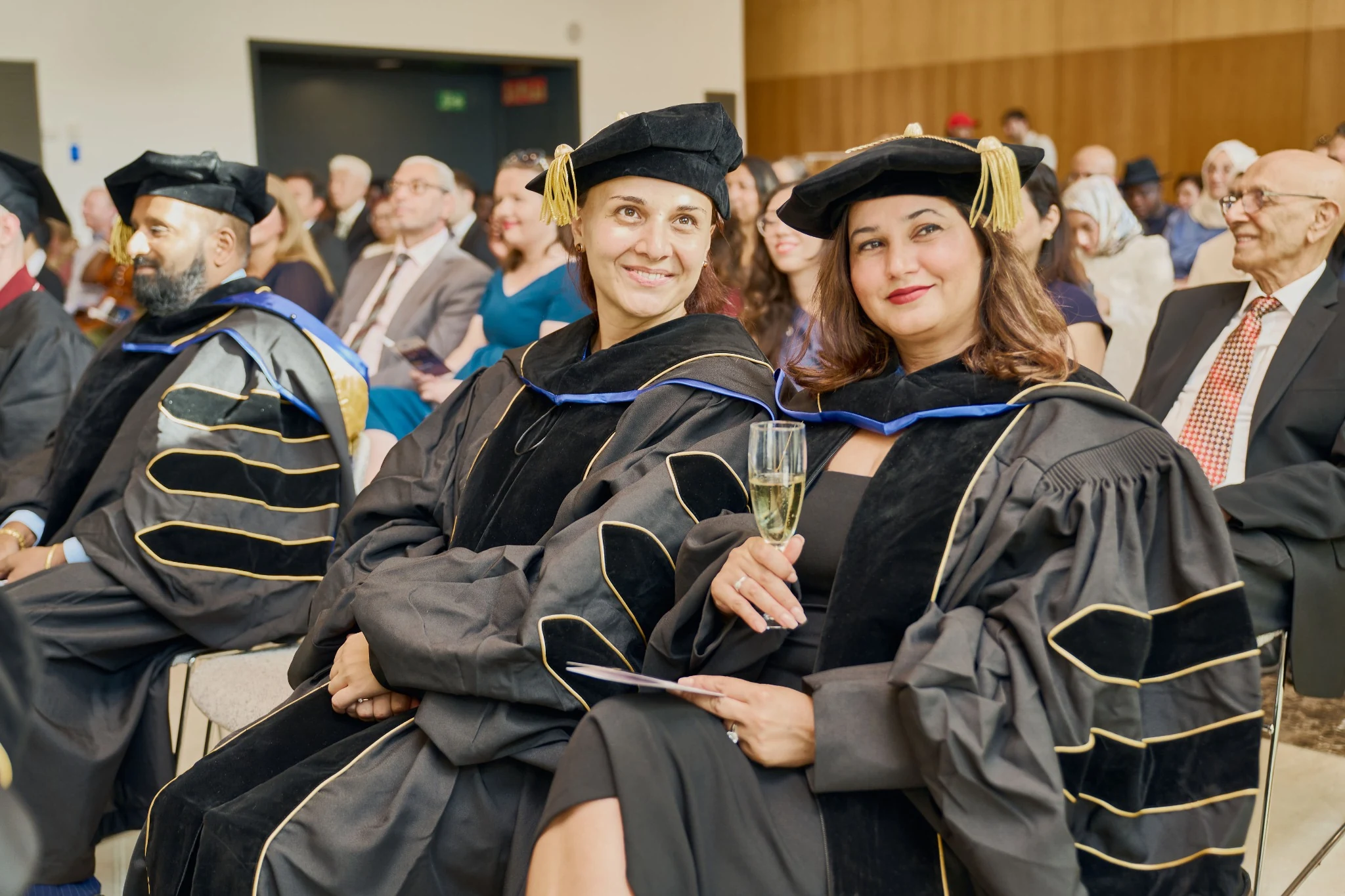
The ceremony brought together graduates representing a remarkable range of countries, professions and life experiences. Speakers referred to graduates and guests from across Europe, North America, Africa, Asia, Australia and the Caribbean, reflecting the genuinely international character of the SSBR community.
For the Class of 2026, graduation represented far more than receiving a certificate. It marked the culmination of years of professional experience, research, late nights, revision, critical reflection and determination.
As graduates were reminded at the opening of the ceremony:
“Enjoy this moment as being the graduation class of 2026 from the Swiss School of Business Research.”
A Truly International Graduation
The 2026 ceremony reflected what SSBR has become: a global academic community built around professionals who continue their education while remaining active in their careers, businesses, organisations and communities.
Graduate speakers spoke about combining doctoral study with senior corporate roles, entrepreneurship, public service, family responsibilities and international careers.
For many, this flexibility was one of the reasons they had chosen SSBR.
One graduate described how SSBR allowed him to continue studying while working as a senior executive, observing that the school’s international structure brought together research, professional practice and experience.
Another graduate described SSBR’s approach in these words:
“Education should never be separate from real life.”
That idea became one of the defining themes of the evening.
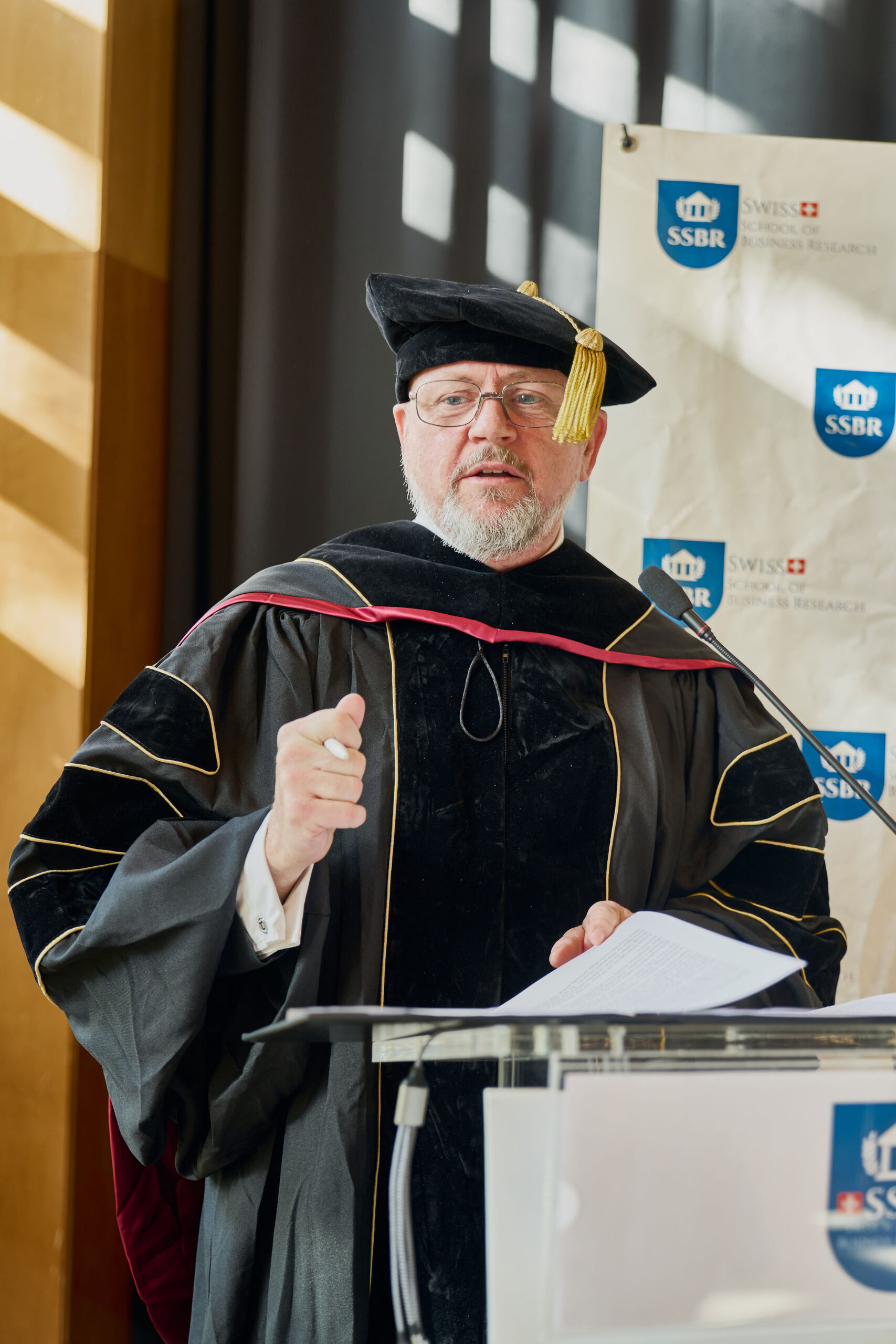
Master of Ceremonies,
Dr Anthony Cairns
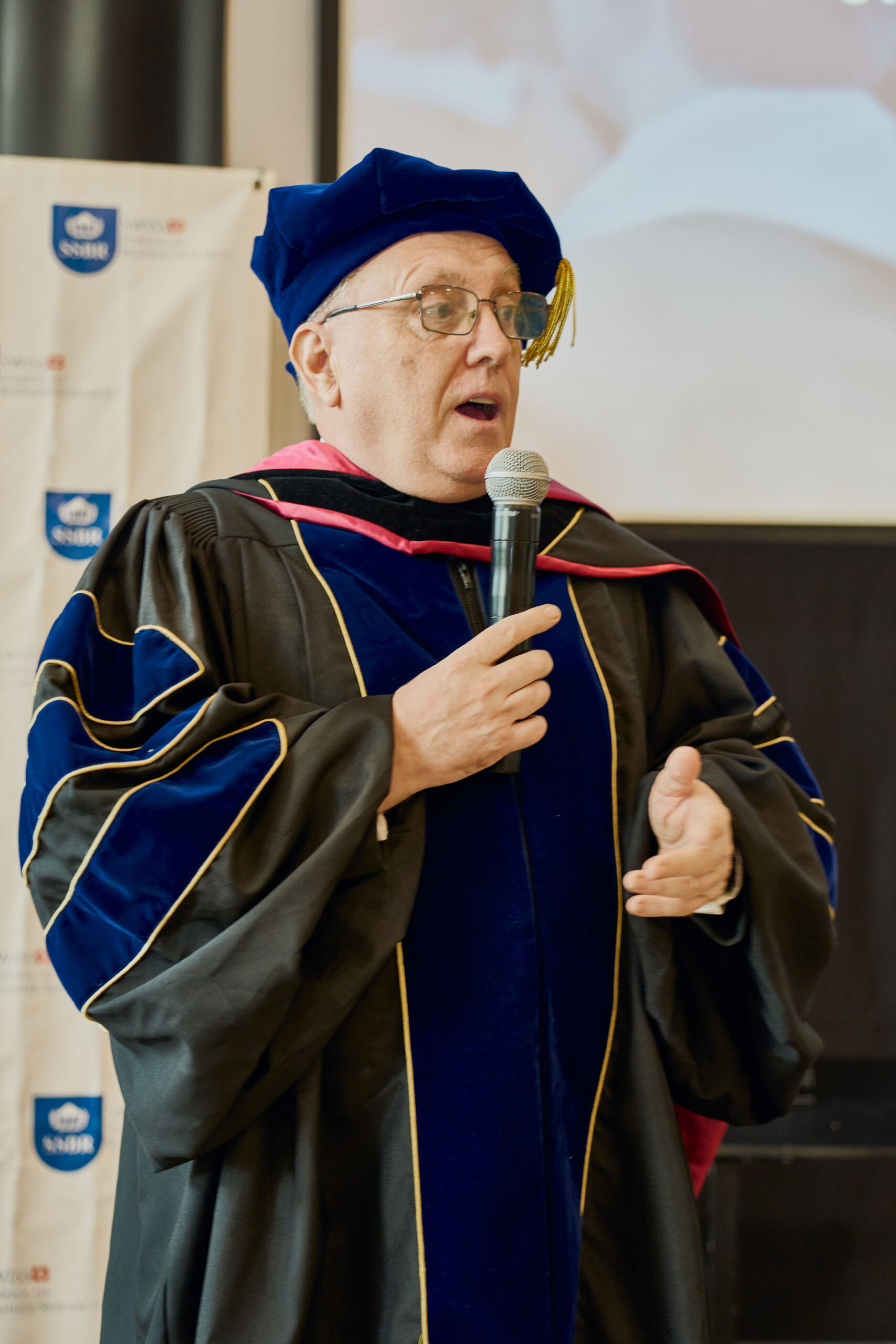
The ceremony was expertly guided by Dr Anthony Cairns, Master of Ceremonies, who ensured the event moved smoothly (almost) from the opening welcome through the graduate addresses, presentation of awards and closing remarks. With warmth, humour and professionalism, Dr Cairns helped create a relaxed but suitably formal atmosphere, introducing speakers, recognising key themes from their remarks and keeping the focus throughout on the achievements of the Class of 2026,
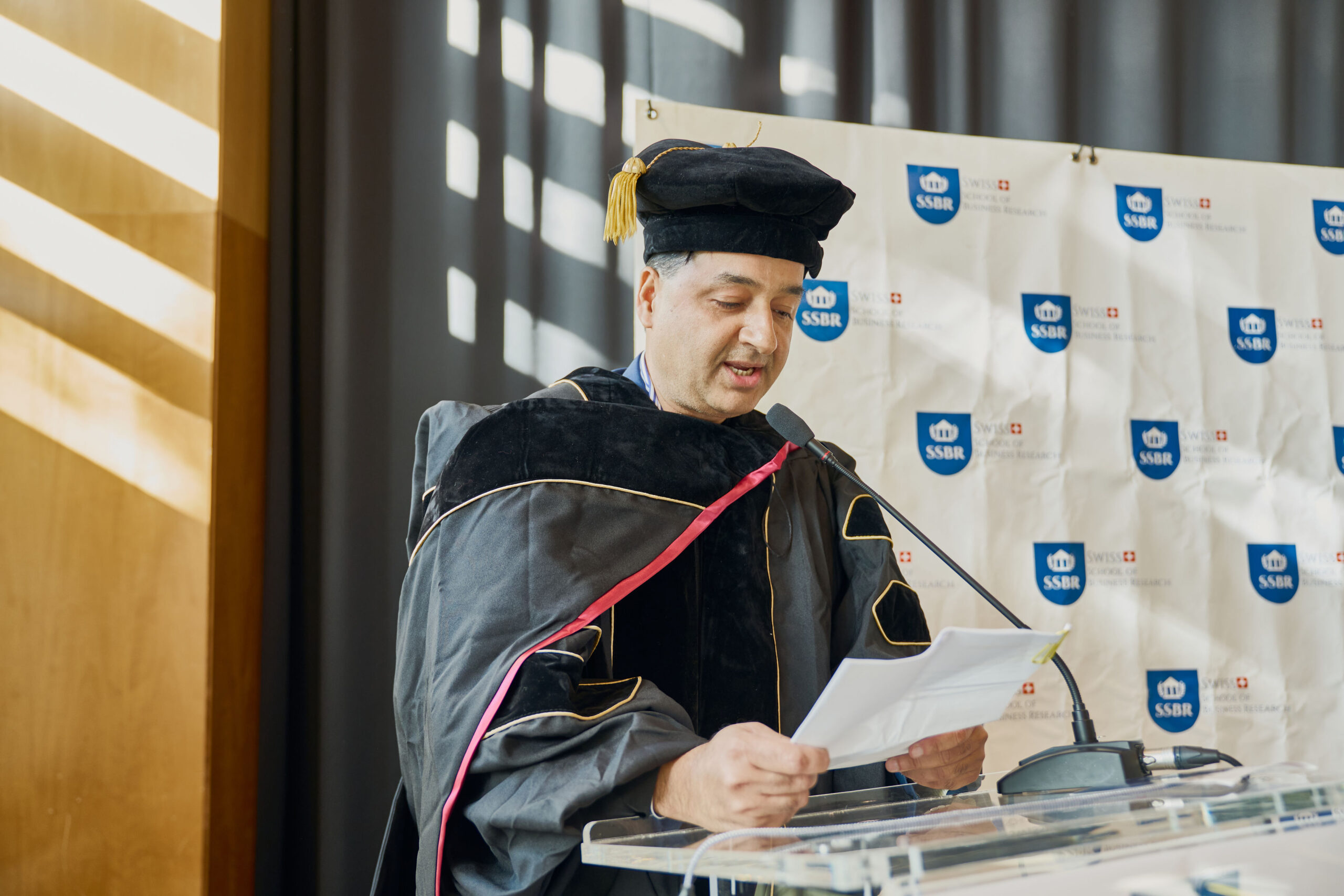
Voices of the Class of 2026
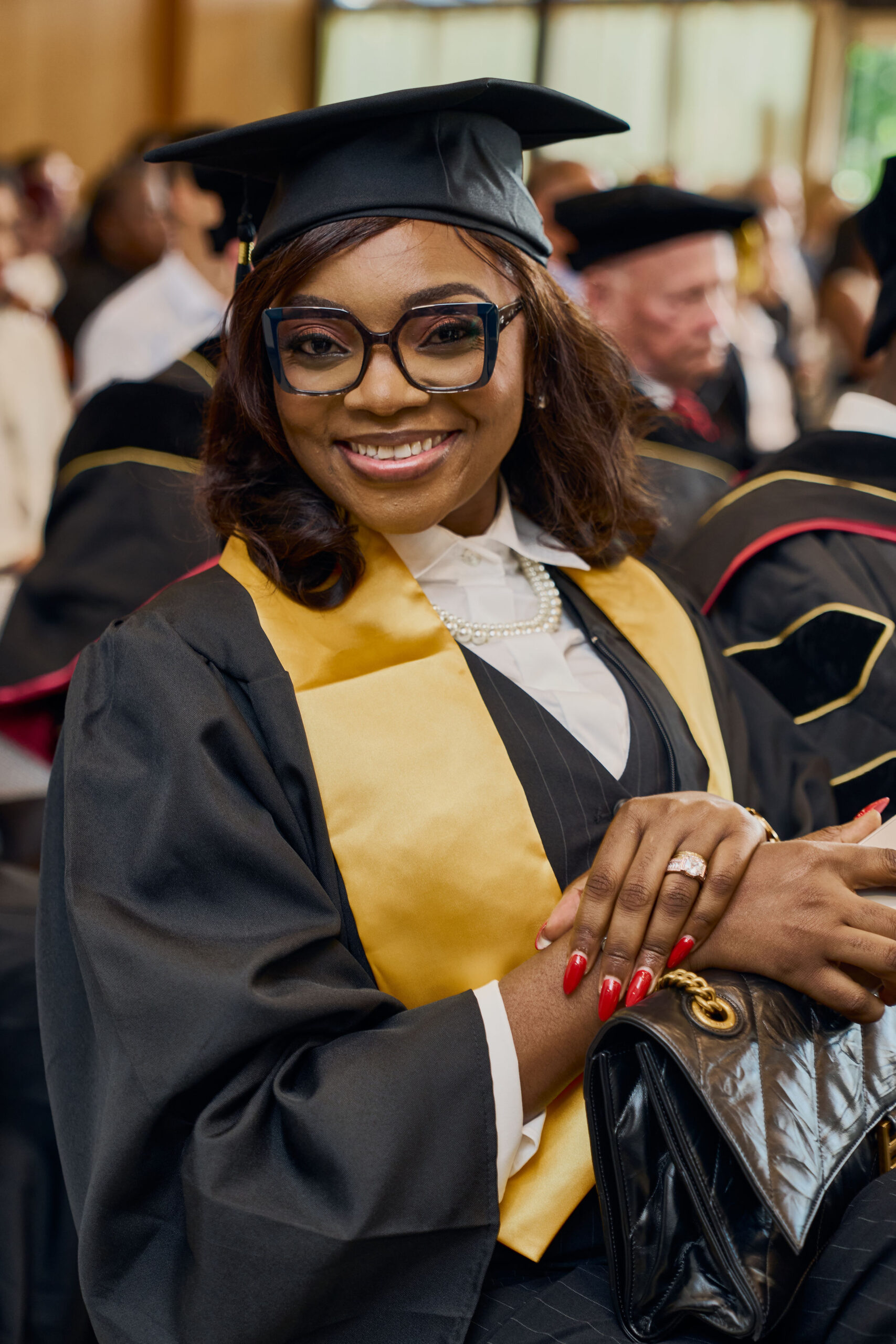
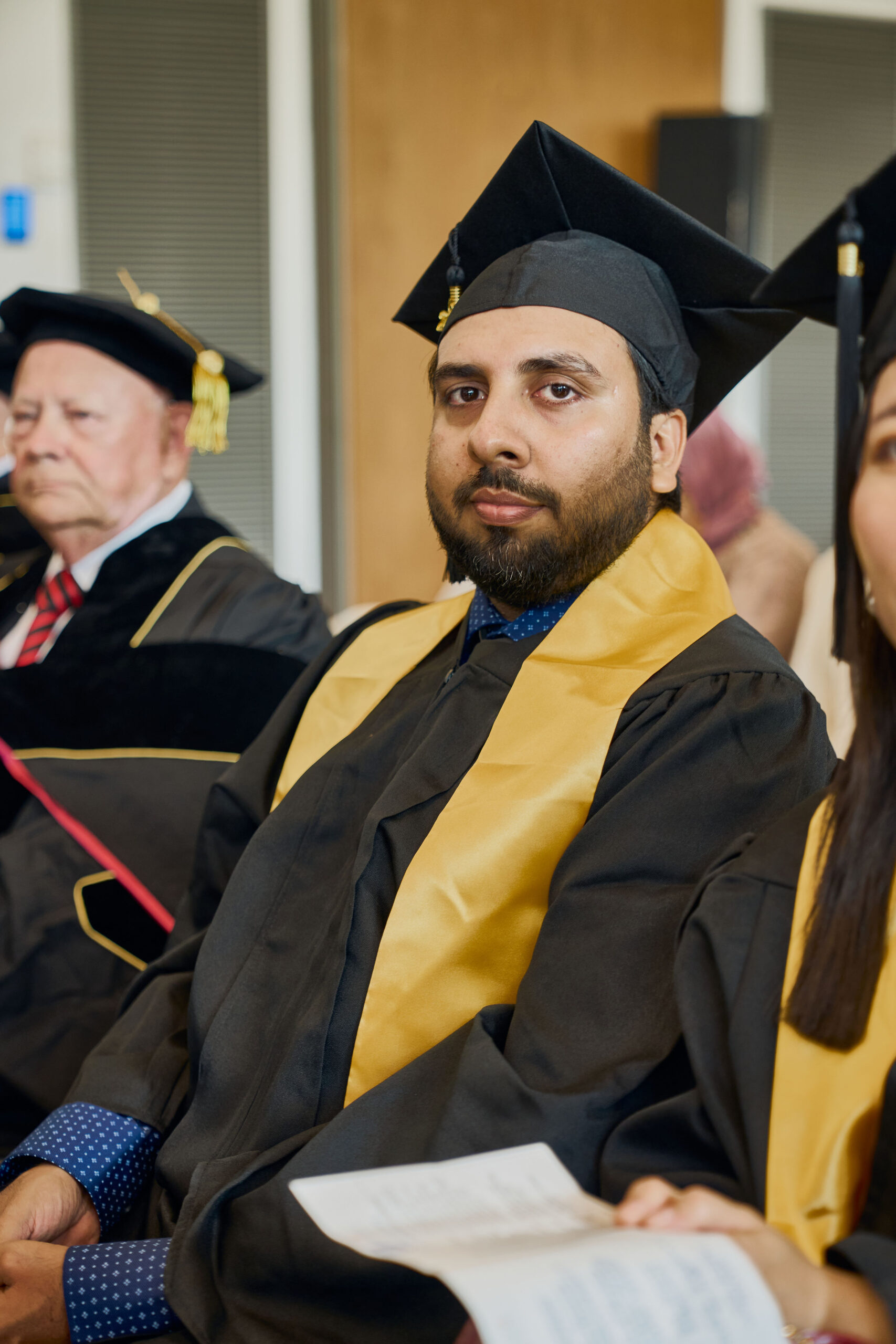
A major part of the ceremony was devoted to the graduates themselves.
Their speeches offered very different stories, but a remarkably consistent message: education is not simply about obtaining another qualification. It is about transformation, responsibility, perseverance and applying knowledge to the real world.
Learning Has No Age Limit
In the first graduate address, Dr Arun Pati reflected on a personal journey that had taken him through professional life, international travel, adversity and ultimately doctoral research.
His central message was that learning does not end at a particular age or stage of a career.
He described education as a continuous journey and encouraged fellow graduates to continue exploring, questioning and taking the next step even when the final destination was not yet visible.
His conclusion captured the spirit of the ceremony:
“You do not complete one doctorate in one night. You complete the journey one country, one page, one module, one decision, and one step at a time.”
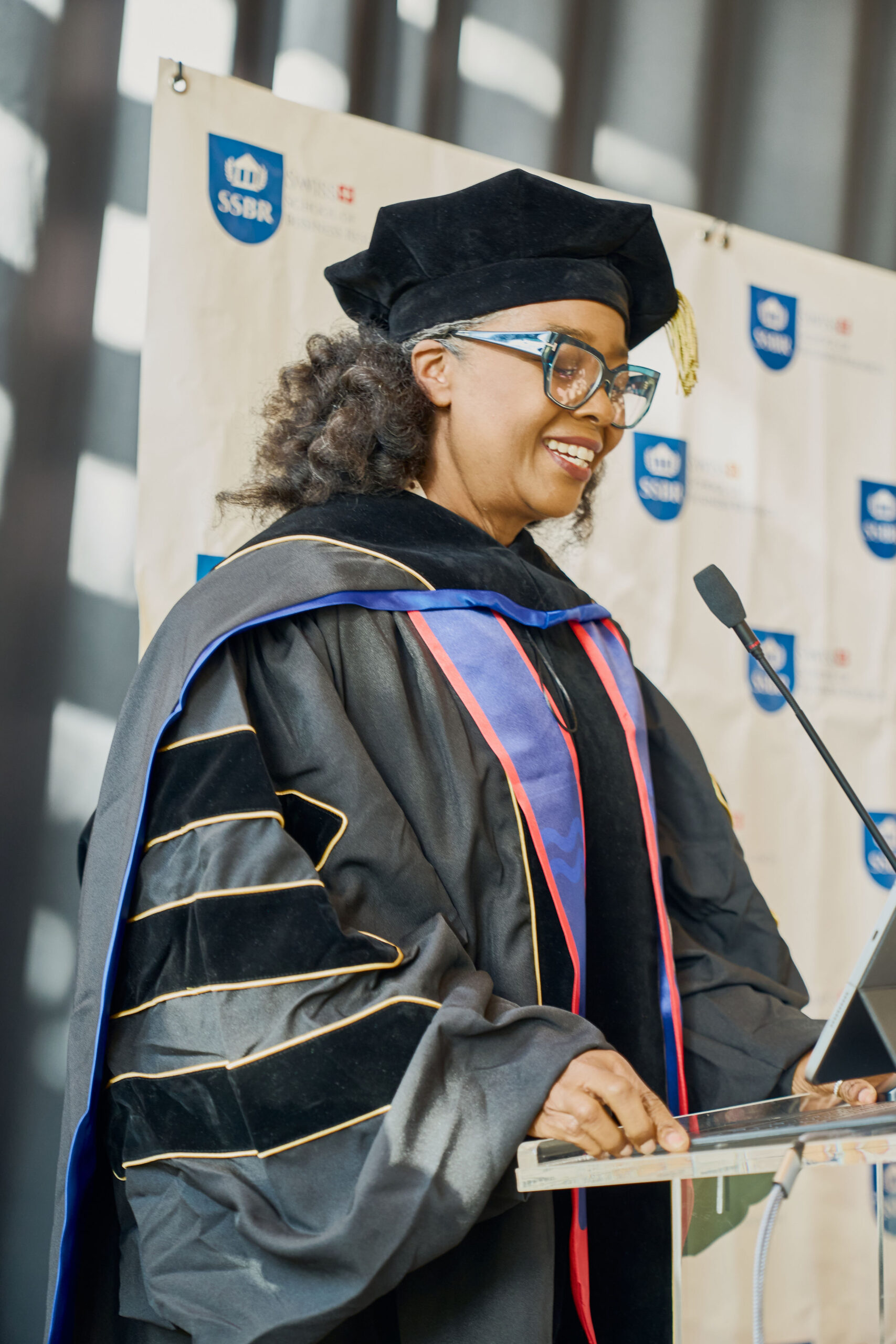
Education That Changes the Individual
Dr Camille Beckford-Johnson spoke about education not merely as preparation for a career, but as preparation for life.
She reflected on the diverse backgrounds represented in the room and the common decision that united the graduates: the decision to continue learning.
Her message emphasised critical thinking, adaptability, courage and lifelong development.
She described her own SSBR doctoral journey as something that changed not only her academic knowledge, but also her approach to leadership:
“The degree changed my title. The journey changed me.”
Her address concluded with a reminder that the lasting value of education lies not only in the qualification itself, but in what graduates subsequently do with it: how they lead, serve, mentor, innovate and contribute to the people and organisations around them.
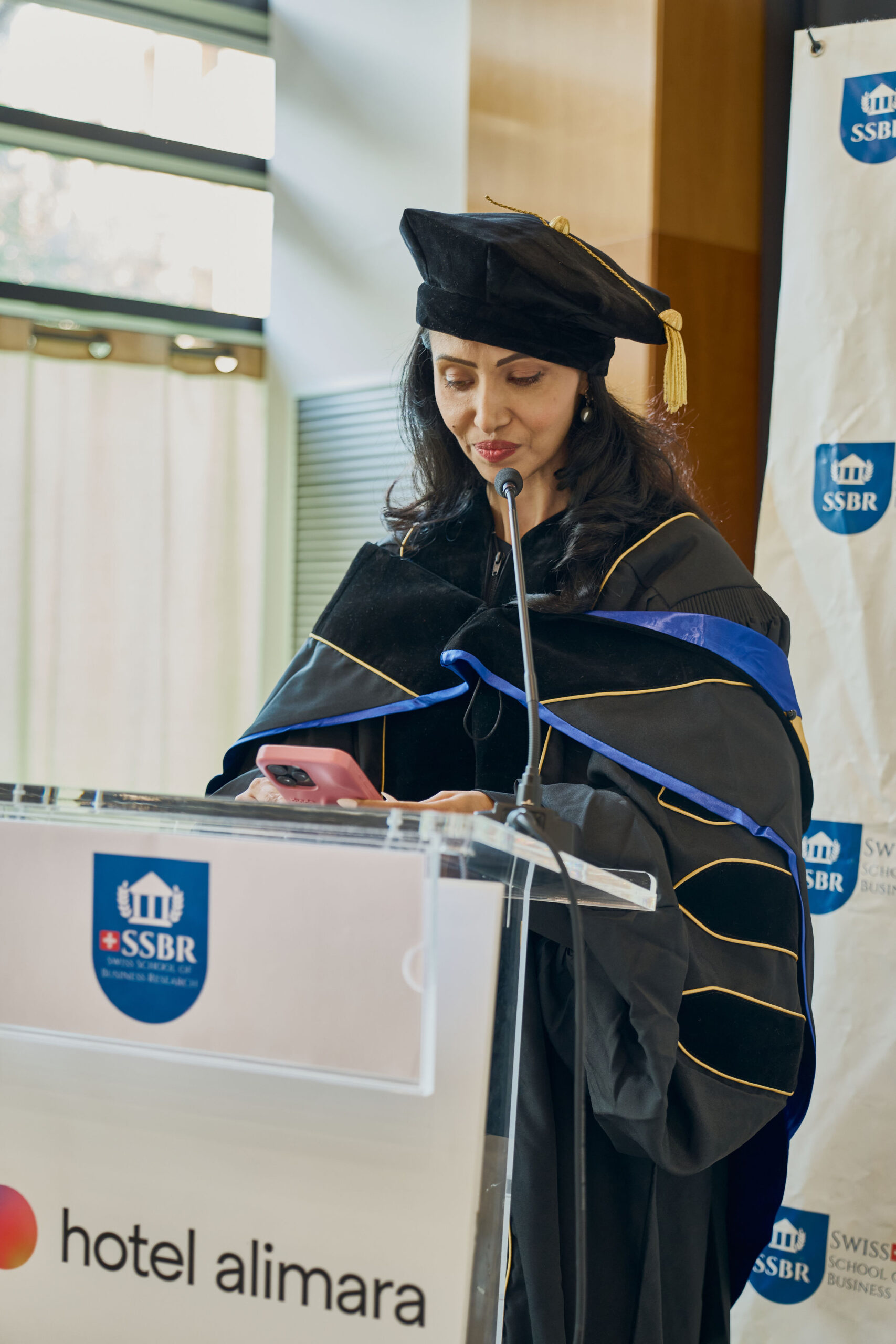
Turning Professional Experience into Doctoral Research
Another important theme of the evening was the relationship between professional experience and academic research.
Dr Arbab Khan, a founder and the first person in her family to earn a PhD, spoke specifically about completing the PhD by Portfolio.
She explained that the programme recognised that significant knowledge is developed not only in traditional academic settings, but also through professional practice, leadership, difficult decisions, innovation, setbacks and reflection.
Her professional work in blockchain, digital assets, tokenisation and agentic AI became part of the intellectual foundation for her doctoral research.
She explained that the doctorate taught her to complement professional instinct and speed with a more deliberate process: testing assumptions, examining evidence, comparing frameworks and documenting the reasoning behind important decisions.
As she told the audience:
“Reflection is not hesitation. It is a leadership discipline.”
Her story illustrated one of the central principles of the SSBR PhD by Portfolio: substantial professional experience can become the basis of rigorous doctoral reflection when it is critically examined, synthesised and defended academically.
Strategy, Action, Together, Tomorrow
Another doctoral graduate structured his address around four words:
Strategy. Action. Together. Tomorrow.
He reflected on his professional work in sustainability, recycling and strategic management and connected those experiences with his doctoral journey.
For him, strategy was not simply planning, but making choices about priorities and the problems worth solving. Action meant moving forward despite work, family responsibilities and the inevitable challenges of doctoral research.
“Together” reflected the reality that no major achievement takes place entirely alone, while “Tomorrow” represented the responsibility graduates have to use their knowledge to create something of value for those who follow.
His message was encapsulated in one particularly memorable observation:
“Our degrees today will tell the world what we studied. Our actions will tell the world what we learned. Our legacy will tell the world what we did with our degrees.”
Turning Professional Experience into Doctoral Research
Another important theme of the evening was the relationship between professional experience and academic research.
Dr Arbab Khan, a founder and the first person in her family to earn a PhD, spoke specifically about completing the PhD by Portfolio.
She explained that the programme recognised that significant knowledge is developed not only in traditional academic settings, but also through professional practice, leadership, difficult decisions, innovation, setbacks and reflection.
Her professional work in blockchain, digital assets, tokenisation and agentic AI became part of the intellectual foundation for her doctoral research.
She explained that the doctorate taught her to complement professional instinct and speed with a more deliberate process: testing assumptions, examining evidence, comparing frameworks and documenting the reasoning behind important decisions.
As she told the audience:
“Reflection is not hesitation. It is a leadership discipline.”
Her story illustrated one of the central principles of the SSBR PhD by Portfolio: substantial professional experience can become the basis of rigorous doctoral reflection when it is critically examined, synthesised and defended academically.
Perseverance Behind Every Degree
Dr Sameera Asadawi, graduating with a Doctor of Business Administration, spoke simply and personally about the work behind her achievement.
She described a journey requiring hard work, patience, commitment and long hours of study and research, while acknowledging the support of her professors, friends, husband and children.
Her closing message was concise:
“There is nothing impossible. Just make your mind, take your decision, and begin.”
The People Behind the Achievement
Perhaps the strongest shared theme across the graduate speeches was that no academic journey is entirely individual.
Parents, spouses, partners, children, friends, supervisors and colleagues were repeatedly recognised throughout the evening.
One speaker described this as “the names behind our name” — the people whose sacrifices may never appear on the diploma, but whose support made the achievement possible.
The ceremony therefore celebrated not only the graduates, but also the families and communities who had supported them.
As was observed after the speeches, a common theme had emerged across all of them: the sacrifices made not only by students themselves, but also by their families throughout the journey.
The Presentation of Degrees
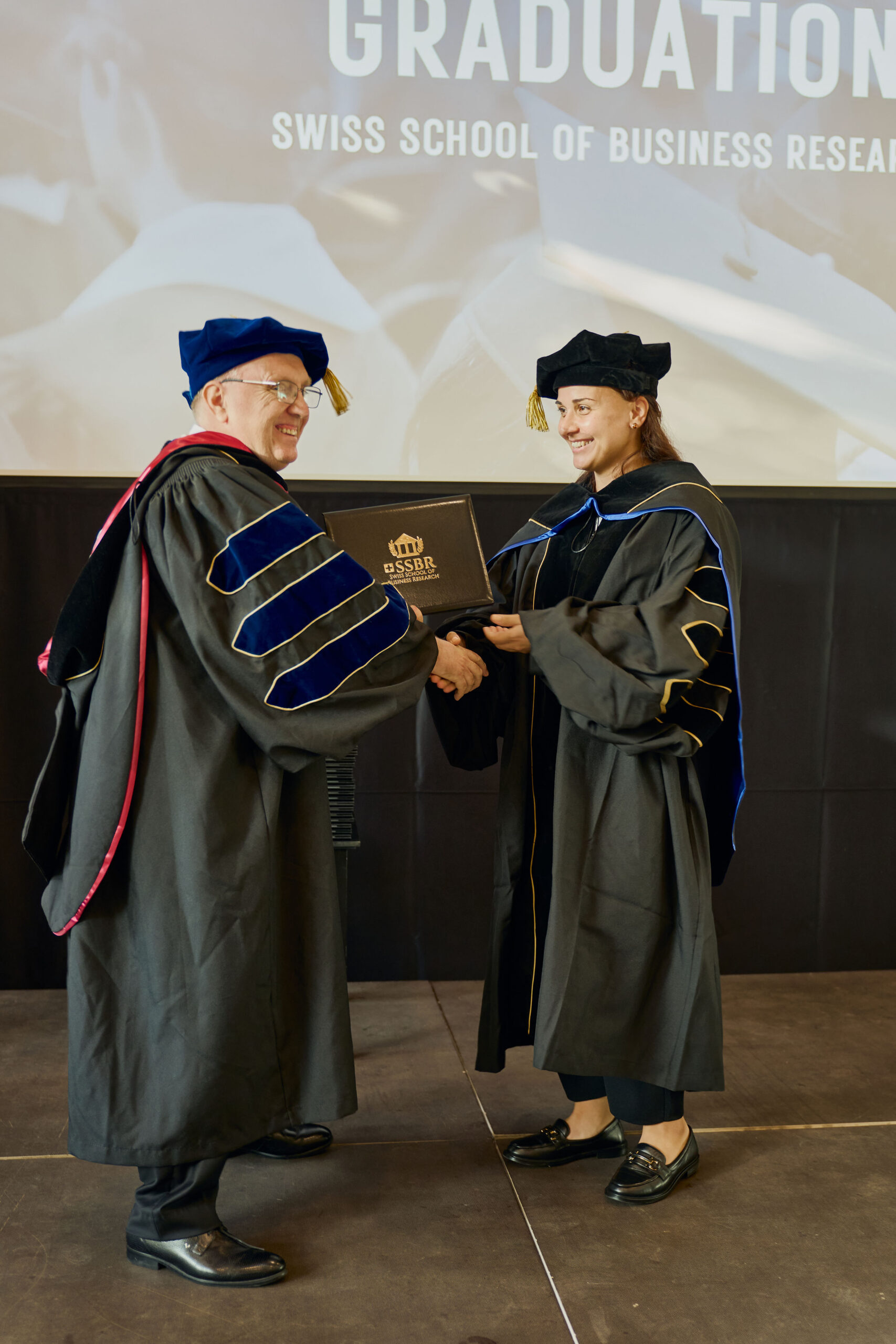
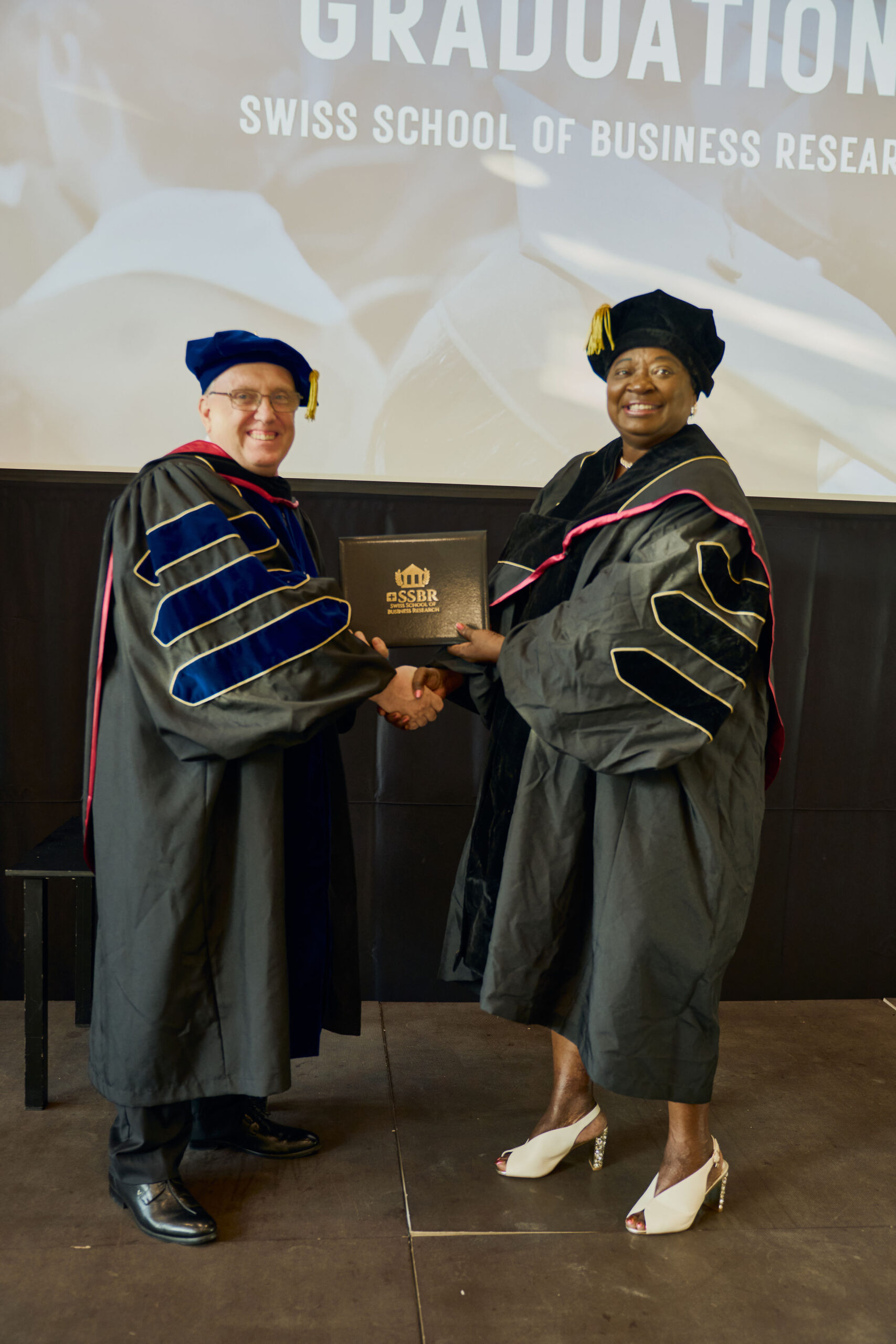
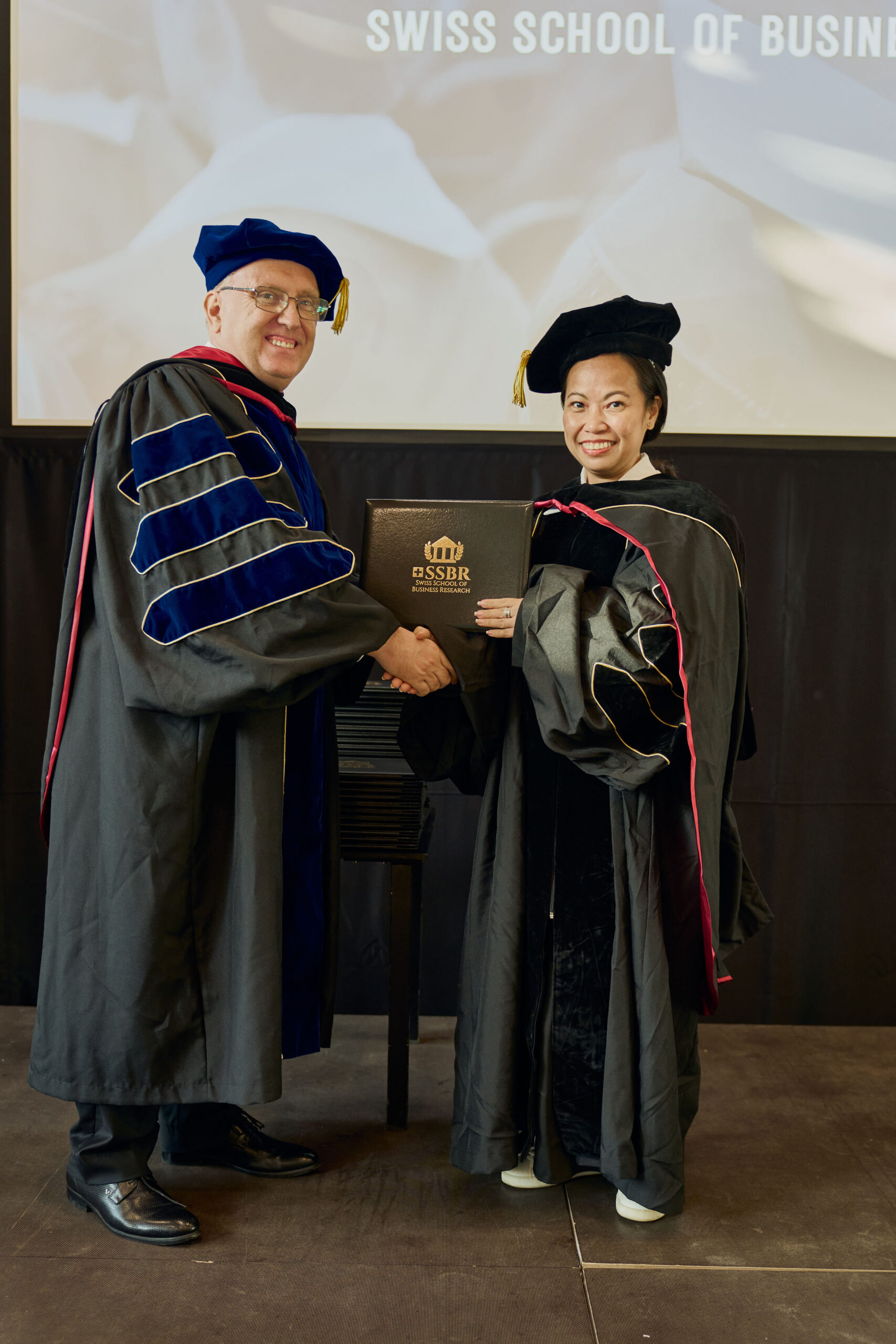
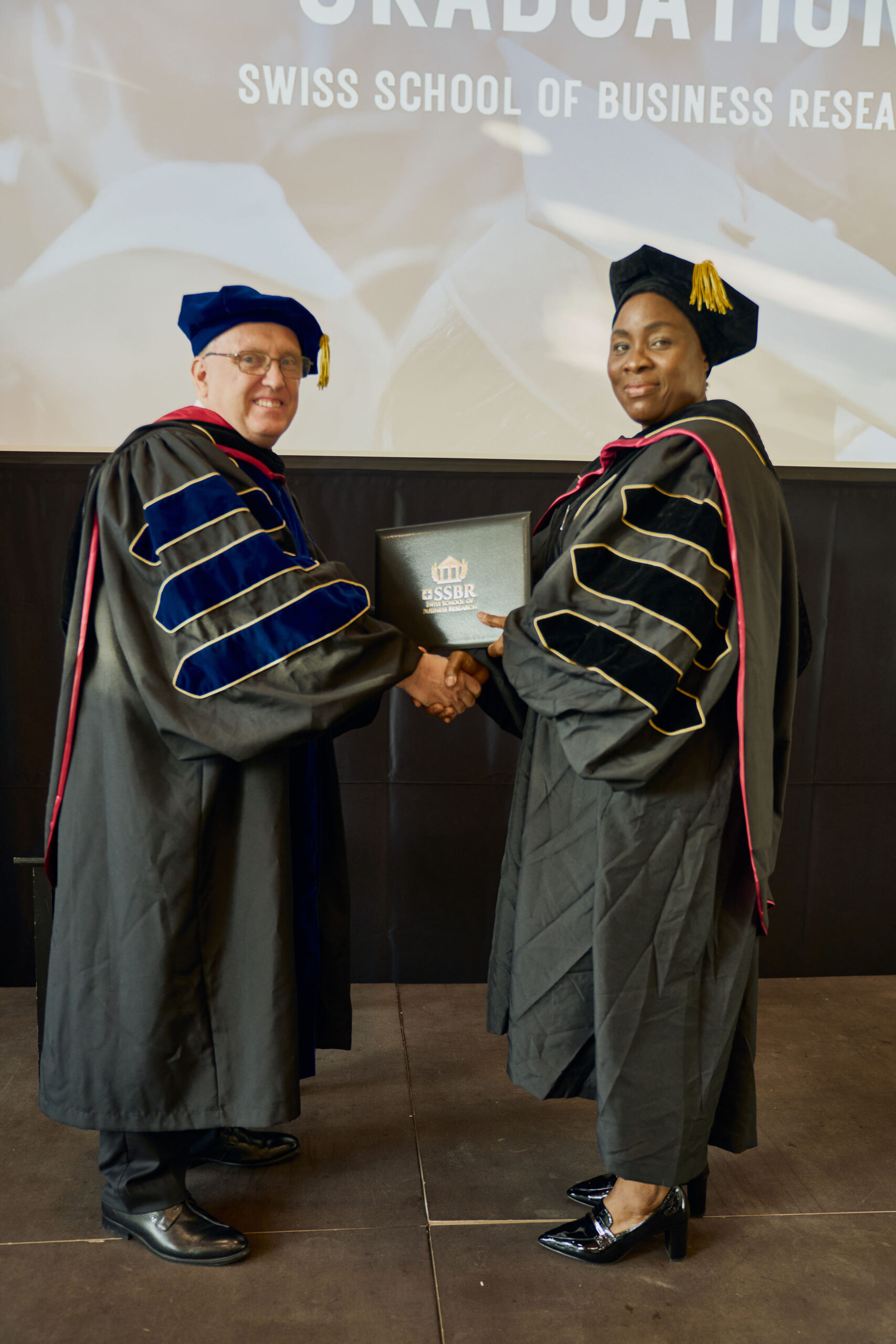
Following the graduate addresses, the ceremony moved to the formal presentation of degrees.
Graduates crossed the stage to receive their awards, meet representatives of SSBR and have the moment recorded in photographs.
Awards presented during the ceremony included doctoral, master’s and bachelor’s qualifications, with a number of graduates also receiving Distinction.
For each graduate, the few moments spent crossing the stage represented the visible culmination of a much longer journey of research, revision and professional development.
A Different Approach to Professional Doctoral Education
In his remarks to the Class of 2026, Dr Stephen Harrison reflected on the changing nature of doctoral education and the particular needs of experienced professionals whose academic ambitions develop alongside, rather than before, substantial careers.
Many SSBR doctoral candidates do not arrive at the beginning of their professional lives. They come to the School after years — and often decades — of leadership, research, consultancy, entrepreneurship, public service, technical work and specialist practice. Their doctoral journey therefore begins from a very different starting point from that of the conventional full-time student.
This is especially important in the PhD by Portfolio, where prior professional and intellectual work is not treated as something separate from doctoral study, but as material that can be critically examined, integrated and developed within a rigorous academic framework.
Dr Harrison noted that describing such a programme simply as a doctorate completed “in a year” can be misleading, because it overlooks the years of work that often precede formal enrolment:
“I call it a PhD in 11 years, but you’ve already done the 10 years’ work for it.”
The remark captured an important distinction. Portfolio candidates are not starting from nothing on the day they enrol. They may already have produced major reports, research, publications, policies, technical projects, strategic initiatives, professional frameworks or other substantial bodies of work over many years. The purpose of the doctoral process is to bring that work into a coherent academic structure, examine it critically, identify its contribution to knowledge or professional practice, and demonstrate that contribution through synthesis, reflection and defence.
For this reason, SSBR’s approach places strong emphasis on recognising the value of advanced professional experience without confusing experience itself with doctoral achievement. The professional work provides the foundation; the doctorate requires the candidate to interrogate that work academically, demonstrate what has been learned from it, identify its limitations, relate it to relevant scholarship and articulate its wider significance.
Dr Harrison also questioned whether traditional models of doctoral education always reflect the realities of experienced working professionals. Many senior executives, specialists and academics simply cannot step away from their careers for three or more years in order to study full time. In his remarks, he argued that doctoral education should make intelligent use of modern technology, more responsive supervision and faster academic feedback rather than preserving lengthy processes simply because they have historically been done that way.
He contrasted this with the SSBR model, which is designed around professionals who remain active in their careers while undertaking doctoral work. The aim is not to reduce academic expectations, but to remove unnecessary delays and to organise the process around a candidate’s existing expertise and professional responsibilities.
That philosophy is closely connected with another principle emphasised during the ceremony: doctoral research should have relevance beyond the university itself.
As Dr Harrison told the graduates:
“You’re producing work that is of importance to your respective industries.”
This focus on practical relevance is central to the SSBR approach. Doctoral work is expected to do more than demonstrate that a candidate can produce a lengthy academic document. It should address meaningful questions, contribute to professional knowledge, challenge existing practice, develop new frameworks or offer insight that can be applied in real organisational and industry settings.
Dr Harrison also reminded graduates of the original meaning associated with the title “doctor” — the idea of the scholar as a teacher and an expert in a defined field. The objective of doctoral study is therefore not simply to accumulate knowledge already held by others, but to reach a level of expertise where the candidate has something authoritative and original to contribute.
For experienced professionals, that contribution can often emerge precisely from the point where professional practice and academic inquiry meet.
A senior executive may investigate a management problem encountered over decades of leadership. A technology specialist may analyse systems and innovations developed throughout a career. A consultant may synthesise frameworks tested across multiple organisations. An entrepreneur may critically examine methods developed through years of building businesses. In each case, professional experience becomes more than a personal history: when subjected to rigorous academic analysis, it can become a source of new insight.
This philosophy also explains why SSBR regards flexibility and academic rigour as complementary rather than contradictory. Flexibility concerns how, where and over what practical timetable the research is undertaken. Rigour concerns the quality of the evidence, argument, analysis, synthesis and defence. One does not have to be sacrificed in order to achieve the other.
For the Class of 2026, this was more than an abstract educational philosophy. Many graduates had balanced advanced study with senior careers, businesses, families and major professional responsibilities. Their presence in Barcelona demonstrated that advanced doctoral education can be structured around experienced professionals while still demanding serious intellectual engagement, critical reflection and meaningful contribution.
The result is a model of doctoral education based not on how long a student occupies a place in an institution, but on what the candidate already knows, what they can critically demonstrate, what new understanding they can produce, and how that knowledge can contribute to their profession and wider society.
This relationship between experience, research and real-world impact remains at the heart of SSBR’s approach to professional doctoral education.